When My Child Is Unwell, My Body Knows
Luca has been sick for several days now.A heavy cough that lingers. Thick congestion. Nights broken into fragments.Pain that visits quietly and stays longer than we would like.Caring for a sick child has a way of bypassing the mind and landing straight in the body. I feel it everywhere.My jaw has been clenched for days — tight, vigilant, unwilling to let go. Sleep feels out of reach, even when Luca finally settles. Tears arrive suddenly, without a clear story attached.There is a constant sense of alertness, as though my body is listening for danger. It feels unsafe inside me.Not because I don’t understand what’s happening. Not because I don’t trust that this illness will pass. But because the body remembers things the mind no longer needs to replay.And when it comes to the health and safety of my children, my system responds quickly. Intensely. Protectively. It takes me back to survival.

The Body’s Relationship With Safety
We often think of stress or overwhelm as something mental — something to think through or reason away. But the body works differently.
It responds through sensation. Through tension. Through restlessness and watchfulness.
When a child is unwell, especially for days on end, the body can slip into a familiar mode:
Stay ready. Stay close. Don’t rest. A cough in the night becomes more than a sound. It becomes a signal. Breath shortens. Muscles brace.
The nervous system moves into high alert before there is time to decide otherwise.
This is not an overreaction. It is a body doing what it learned to do in moments when care mattered deeply.
Stay ready. Stay close. Don’t rest. A cough in the night becomes more than a sound. It becomes a signal. Breath shortens. Muscles brace.
The nervous system moves into high alert before there is time to decide otherwise.
This is not an overreaction. It is a body doing what it learned to do in moments when care mattered deeply.
When the Body Is Asking for Support
What I am noticing most clearly right now is this: my body isn’t malfunctioning — it’s communicating.
The tight jaw is a message. The sleeplessness is information. The tears are not weakness; they are movement.
When safety feels uncertain, the body mobilises to protect what matters most. The difficulty comes when that state has nowhere to soften.
When vigilance becomes the only available posture.
Offering Safety Back, Gently
I am not trying to force calm. I am not telling myself to “just relax. I am not rushing myself toward rest.
Instead, I am practising small gestures of care: Letting my jaw unclench, even briefly. Placing a hand on my chest and slowing the exhale. Naming, quietly and honestly: This is a lot.
Sometimes safety looks like asking for help. Sometimes it looks like pausing instead of pushing.
Sometimes it is simply allowing the body to be as it is, without judgement.
Safety is not an idea. It is something felt.
And when the body has learned to stay alert, it needs repeated experiences of being held — slowly, patiently, over time.
A Closing Reflection
Motherhood brings us into close contact with our most tender places.
When our children are unwell, the body can respond with urgency, fear, and deep care all at once — without asking permission, without explanation.
If you recognise yourself here — tight, tearful, unable to rest — please know this: Your body is responding to love, responsibility, and memory intertwined.
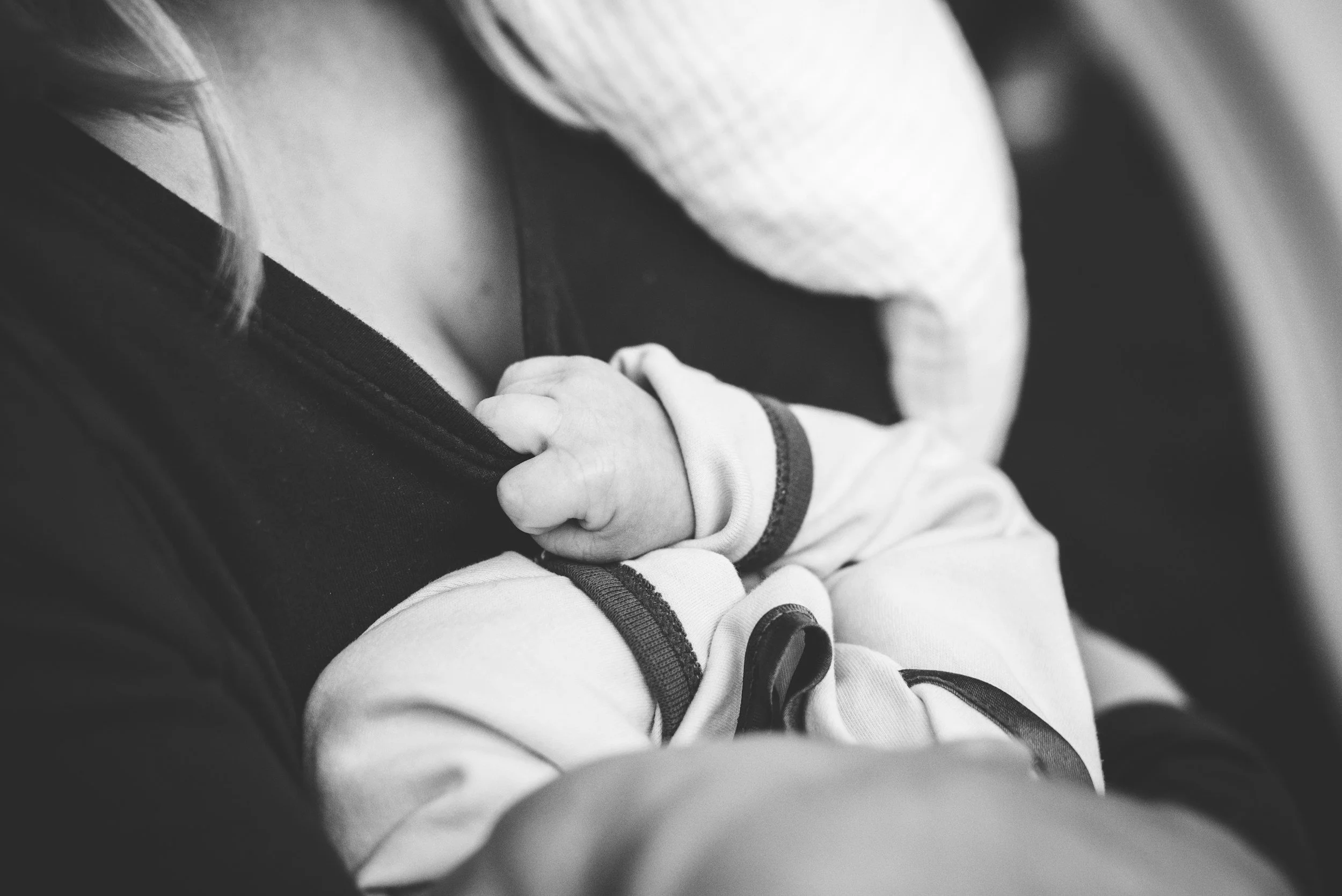
Today, I am holding Luca. And I am learning, gently, to hold myself too.
Both matter.
Both deserve care.