The power that was never taken — only quieted
Before you Begin - A gentle note
Some of what lives in these words may touch tender places. You are invited to move slowly, to stay in choice, and to engage only to the depth that feels supportive today. If anything feels like too much, you may pause, orient to your surroundings, or return another time.
This post is offered as companionship and reflection not a replacement for personalised care.
Take what serves you. Leave the rest.
May these words meet you gently.
“The doors to the world of the wild Self are few but precious. If you have a deep scar, that is a door. If you have an old, old story, that is a door. If you love the sky and the water so much you almost cannot bear it, that is a door.”
Women Who Remember
Let me tell you this the way I would if we were sitting on my sofa, the boys asleep, the house finally quiet. A tea on hands, a whole lot of honesty.
Over twelve years ago, someone handed me Women Who Run With the Wolves by Clarissa Pinkola Estés. I tried to read it. I really did. But I didn’t get it. Not the language. Not the metaphors. The bones, the wolves, the wild woman — it all felt dramatic, abstract, not quite accessible. I remember closing the book thinking, This is not for me.
But something in me felt it anyway.
Because even though I couldn’t explain it, I already knew what it meant to hide. I had learned, quietly and very young, that to belong — to be loved — I needed to be pleasant. Easy. Good. And, that book, well …. asked me to look in the mirror. I was not ready.
Anger didn’t have a safe place to land. Frustration didn’t. Rage definitely didn’t. Grief and sadness had to stay contained, manageable, polite.
When my dad died, I was 22. That loss didn’t make me louder, at first. It made me more compliant. I became even more composed, even more agreeable. I didn’t want to burden anyone with my pain. I didn’t want to disrupt the room. So I carried it quietly. For a while, anyway.
There was love, fun, mess, indulgences in my world. There was a culture of joy — and we Brazilians do love a good party. Celebration, music, movement. But sometimes that brightness became my way of staying “happy.” Staying away from the deeper feelings that didn’t feel welcome anywhere. If I’m honest, I flipped from composed to living without containment. Without clear boundaries. Making choices that slowly harmed me — in relationships, in how I treated my body, in what I tolerated. Some of it was cultural. Some of it was survival. My way to remain high-functioning while avoiding what felt too heavy to hold. Many stories from this time carry so much shame.
Eventually, I got tired. Not dramatically. Just deeply tired. Tired of shaping myself to fit. Tired of confusing compliance with connection. Of trying to fit in just anywhere, or any arms, so I wouldn’t feel so alone.
So in 2016, I made a bold move. I moved from Rio de Janeiro to Sydney.
And almost immediately, I met Honza — now my husband. I won’t unpack every detail, but something about our relationship began to shift me. Slowly, gently, the defenses I had perfected — pleasing, over-functioning, staying agreeable — began to crumble. Our dynamic asked for something more honest.
Years went by, then pregnancy came. And birth. And the ongoing becoming of me as a mother.
And suddenly, that book — the one I didn’t understand — started to make sense.
Because for me to understand the wild woman, I first had to notice where I’ve gone quiet. This piece is about this - where this book lands on me today — and my encounter with agency and power-within.

Power-within vs. compliance disguised as goodness
For a long time, my agency was quiet. Not gone. Just quiet.
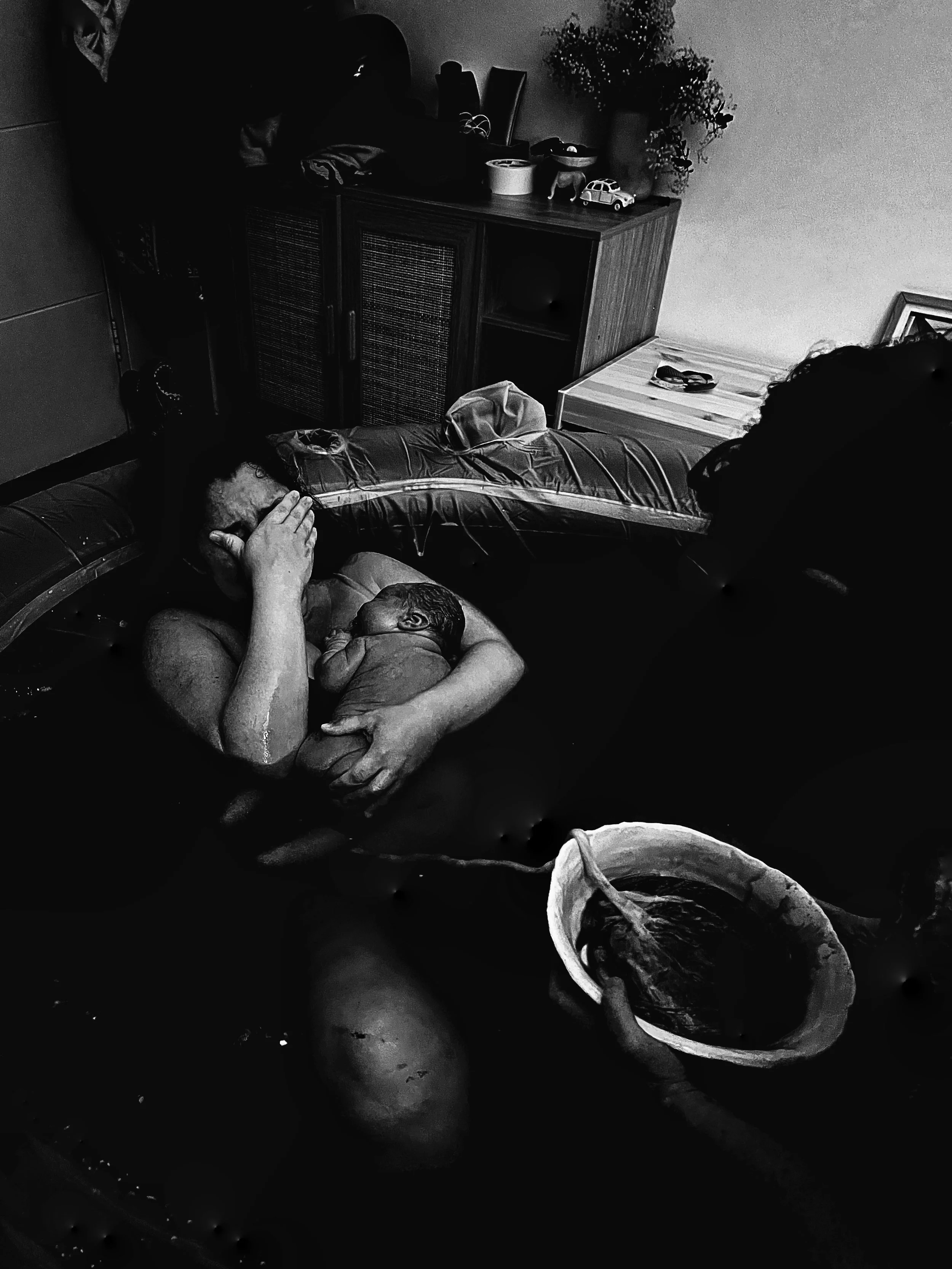
By the time I gave birth to Kai, I was educated, informed, “trained”. I thought I knew myself well. And yet, in that birth room, something very old in me took over.
In moments of intensity, I felt myself turning outward. Scanning faces. Looking for cues. Wanting reassurance that I was doing it “right.” I spoke. I asked questions. I even wanted to make sure people had something to eat while labouring in my living room. There were subtle moments where I deferred. Where I trusted others over the quiet knowing in my own body.
No one forced me into silence. No one was cruel. But I can see now how quickly I overrode myself.
It felt familiar to cooperate. To be reasonable. To not be “too much.” To lead the room. Have some control. And, most of all, to trust someone else knows better, and I'd better listen.
That’s the thing about compliance — it can look like goodness.
Many of us were taught that goodness meant agreeable, grateful, and easy. Motherhood often intensifies this. Smile through depletion. Endure without complaint. Call self-abandonment or burnout, “strength.”
But a nervous system that chooses compliance is not weak. It is intelligent within threat. It learned how to keep me, and you safe.
Power was never taken from me. It was quietened under survival.
I’ve come to learn power-within is not loud. It is not domination. It is not resilience performed for others. It is the quiet return of choice.
And choice only returns when the body senses safety.
This is where the way I make sense of healing after birth - what I call Held Within Capacity - meets the Wild Woman. No instinct emerges in unsafe terrain. Agency grows where the nervous system feels: I am not being rushed. I am not being judged. I am allowed to change. I will not be punished for my truth.
Power-within does not grow where silence is demanded. And wild does not mean chaotic. It means truthful.
This is why healing is relational. And why environments matter as much as insight.
Birth, death & the life–death–life cycle
After Kai’s birth, life cracked open again.
Eighteen months later, my mother died. Then my grandmother. Then my other grandmother.
I was mothering new life while losing the women who made mine possible.
There is something profoundly disorienting about that. Even when relationships were complex. Even when there were ruptures. A longing rises: Now I understand. I wish I could tell you I understand.
Clarissa speaks about the life–death–life cycle. How birth and death sit close together. How the wild woman lives at the edge of these thresholds. I felt that in my bones.
Grief softened me. It stripped me too.
In that season, I began to see more clearly where I had equated safety with silence. Where I shaped myself to stay loved. And underneath it all — shame. So much shame.
Not because I had lived “wrong.” But because I believed parts of me were wrong. Too intense. Too emotional. Too angry. Too needy.
I’m writing this with tears in my eyes. Not from regret. But from compassion.
Because now I know shame cannot survive empathy. This helped me bring new meaning to my relationship with my mother figures - not to romanticise, but to make peace. To grieve their absence but also what I didn’t have, and to allow love for what I did have.
The body as truth-teller
Trauma-sensitive yoga changed something fundamental in me.
I didn’t realize how much my body was holding until I slowed down enough to feel it. The clenched jaw. The chronic neck pain. The constant bracing. The sense that I was always waiting for something to go wrong.
I thought I understood my shadow intellectually. But in my body, it was loud.
As I softened — gently, slowly — safety began to feel internal. Not dependent on others so much, or on approval. Not dependent on being the “good” one.
So when I became pregnant with Luca, I was still grieving. Joy and sorrow were sitting side by side. But I was different.
In Luca’s birth, I could feel myself.
I wasn’t scanning the room in the same way. I wasn’t negotiating my instincts. I could say yes and feel it fully. I could say no and stay upright inside myself.
It wasn’t without intensity. It was that I was inside the experience.
Agency didn’t arrive dramatically. It returned quietly. Not reclaimed. Not rebuilt. Just uncovered.
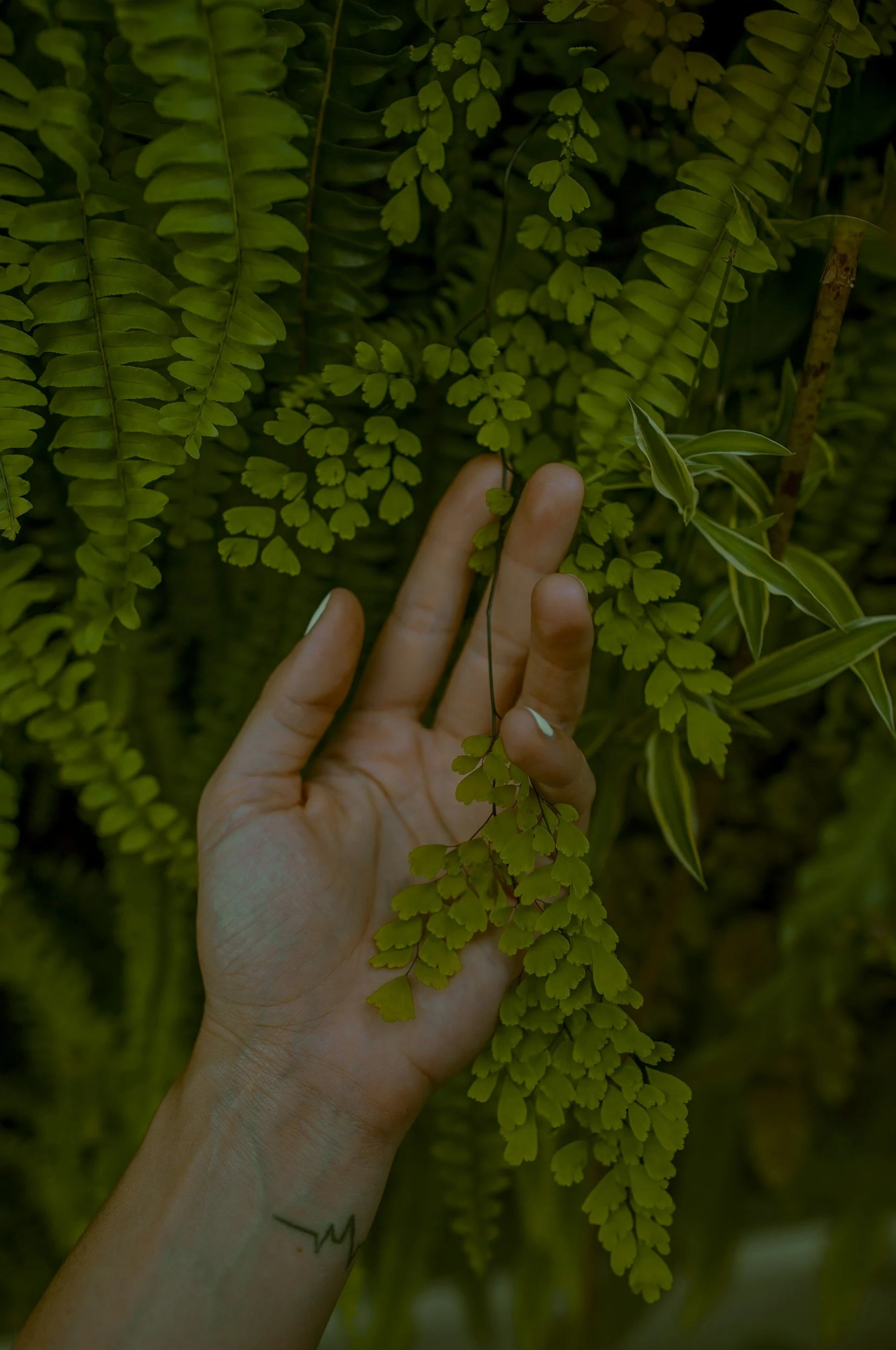
Wholeness is not becoming better. It is becoming real.
Motherhood brings up so much.
Shame when instinct and expectation collide.
Guilt when we are forced to choose between our needs and our child’s.
Grief for the birth we imagined, the support we didn’t receive, the version of ourselves that shifted too quickly, the ones we miss.
These are not signs of failure. They are signs that something mattered deeply.
I’ve come to learn that emotions are not problems to transcend. They are signals waiting for safety.
Shame softens when witnessed without correction.
Guilt loosens when context is restored.
Grief moves when it is not rushed.
Wholeness is not becoming better. It is becoming real.
Gathering the bones — the anger, the ambivalence, the exhaustion, the longing — and allowing them to exist without exile.
Power-within grows where softness is allowed
Power-Within, agency, for me now, isn’t about control.
It’s about inhabiting my life.
Collaborating without disappearing.
Receiving support without feeling bad about myself. Less than.
Staying connected without leaving my body.
It’s the moment you feel: “I can stay with myself — even here.”
That is wild. That is maternal. That is human.
If you recognize yourself in the version of me who smiled, accommodated, cooperated — there is no shame here. It kept you safe.
And… maybe now, something in you is ready to remember.
Closing reflection — an offering
If it feels supportive, a small practice, an invitation to pause and listen into.
Let your feet feel the ground. Let your back be supported by the chair, sofa - let your body feel being held by what sustains you now.
Take notice of where you are. Listen to sounds, lights, and colours. Stay with your outer world for a little.
When you are ready, you may wish to gently move into your inner world. Noticing your breath, just the body breathing itself — not to calm yourself, just to notice.
And, if it feels right to reflect today, gently ask:
Where in my body do I feel most me right now?
Is there any place that softens when I consider the word “choice”?
What environments ask me to shrink to belong?
If I didn’t have to perform goodness in this moment, what would shift — even slightly?
You don’t need to change anything. Or act on anything right now.
Just notice. Perhaps write.
Stay with yourself for a few more breaths. When you’re ready, come back to the room. Take your time.
Listening — without rushing, without correcting — is already an act of agency.
“The wild woman carries the bundles for healing.”